

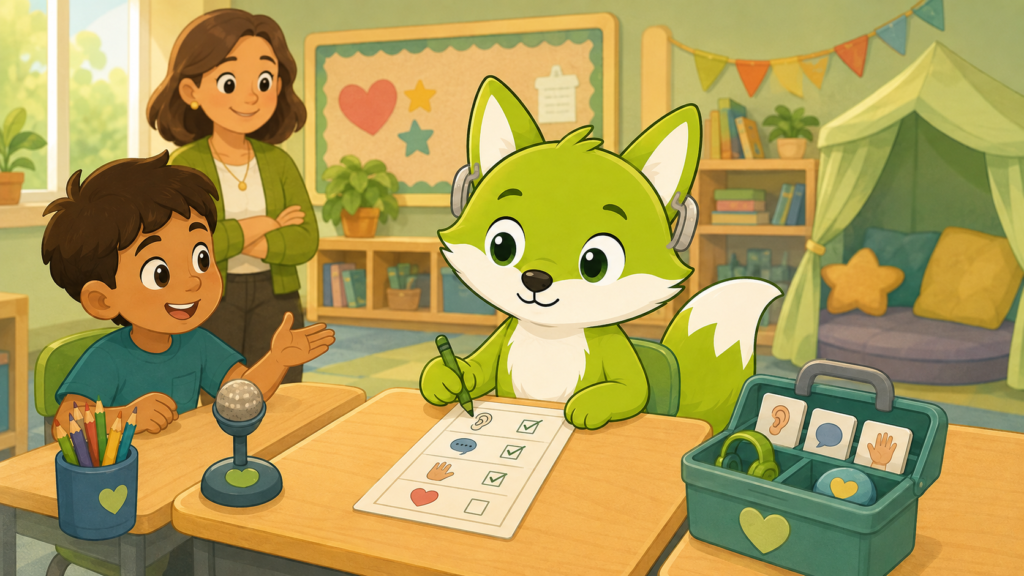
Mabel’s Listening Toolbox: Real strategies for problem-solving and self-advocacy
Sometimes listening is easy for Mabel.
Other times, the room is noisy, people are talking at the same time, or Mabel misses an important direction.
Mabel used to think there was only one thing she could do when that happened: try harder to hear.
But she has learned something important.
Good listeners use more than their ears—and it’s okay to use tools that help.
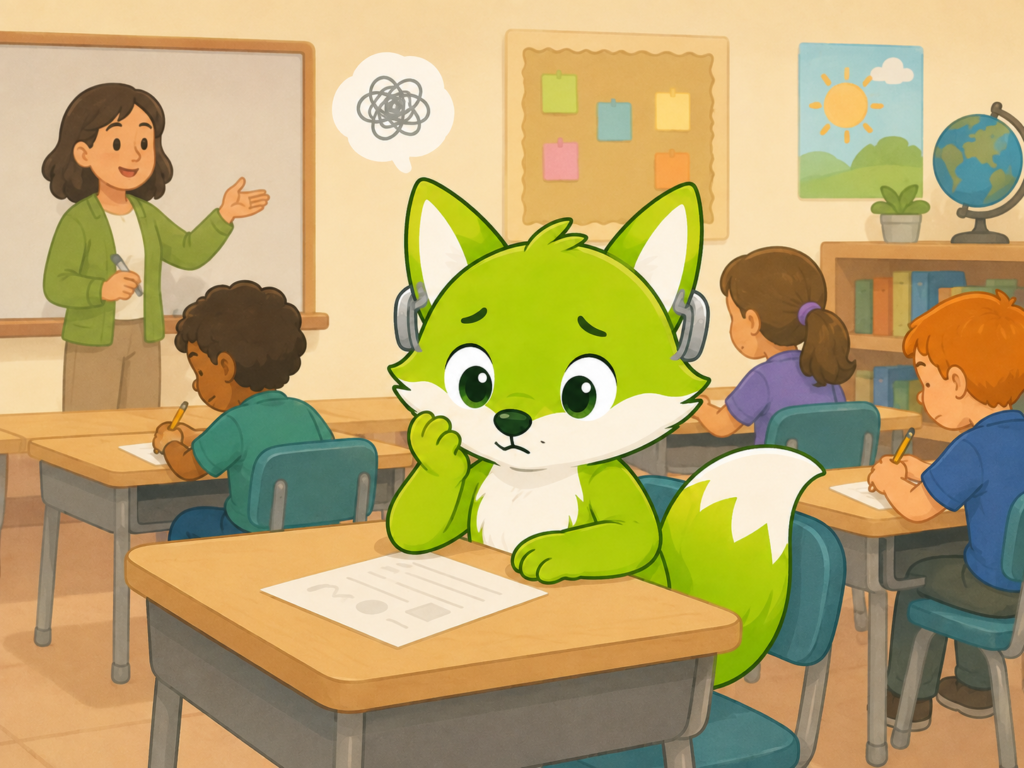
One day at school, Mabel missed part of the teacher’s directions.
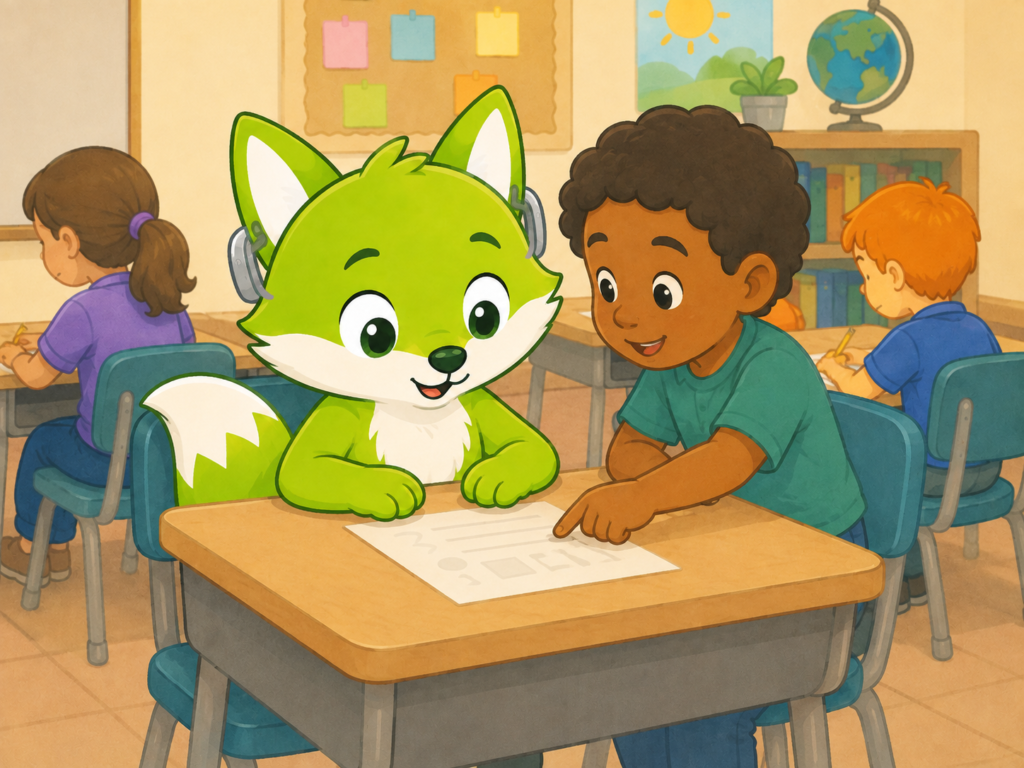
Instead of guessing, she asked a friend what she had missed. Then she checked the paper on her desk to make sure she understood.
Problem solved.
Later, the classroom became noisy because everyone was talking at once. Mabel had another idea.
“Could we have one person talk at a time?” she asked.
The class tried using a talking piece so everyone knew whose turn it was to speak. They also used the classroom microphone so Mabel could hear the speaker more clearly.
Suddenly, following the conversation became much easier.

Mabel realized that listening isn’t something we only do with our ears.
We listen with our eyes by watching faces and signals.
We listen with our brains by thinking about what someone is saying.
And we listen with our hearts by paying attention to how other people are feeling.
But even with great tools, listening can be tiring.
When Mabel starts feeling overwhelmed, she knows it may be time for a listening break. She might take a walk, read a book, draw, do something calming, or take a short break from her hearing devices when it is a good time to do so.
Taking a break helps Mabel recharge.

And when someone new is teaching her?
Mabel doesn’t wait for them to figure everything out.
She can show them the microphone, explain how to use it, and tell them what helps her hear and understand best.
Mabel even uses her listening toolbox outside the classroom.
During sports and games, Mabel and her teammates can create simple hand signals for things like move over, come here, or go the other way. If Mabel isn’t sure about a play, she asks a question before everyone gets started.
Every tool is a little different.
And that is exactly the point.
Mabel doesn’t need everyone around her to communicate in one perfect way. She can ask questions, use technology, look for visual clues, take breaks, and teach other people what works for her.
Mabel’s Message
Knowing what helps you is a strength. Asking for it is self-advocacy.
You don’t have to pretend you understood something when you didn’t.
Ask a question.
Check again.
Use your tools.
Take a break when you need one.
And don’t be afraid to teach other people how they can help you hear and understand better.
Try It With Mabel
What would you put in your listening toolbox?
Think of three things that make listening or communicating easier for you.